
the space with motion-detecting lighting, managing landscaping for clear sightlines, and anchoring outdoor equipment to prevent tampering and theft.
These practical strategies transform vulnerable properties into safe, inviting environments for schools, neighborhoods, and community centers.
By combining physical boundaries with improved visibility and secured fixtures, property managers can deter unauthorized access without requiring massive budgets or complete redesigns.
There is a moment every school administrator, HOA manager, or daycare director eventually experiences. You walk through your outdoor space, and something feels off. Maybe it is a gate hanging open at the edge of the playground, or a section of fencing that has started to buckle.
Maybe it is just the creeping realization that when the lights go down and everyone goes home, your outdoor space is left more exposed than you would like.
That feeling matters. Because a yard or community outdoor space is not just property, it is where kids discover their limits on the climbing structure, and neighbors become neighbors.
Protecting that space is not a bureaucratic checkbox, but a real act of care for the people who count on it. With a few smart, strategic moves, you can dramatically improve both the safety and the inviting feel of your outdoor space.
1. Install Durable Fencing and Secure Gates
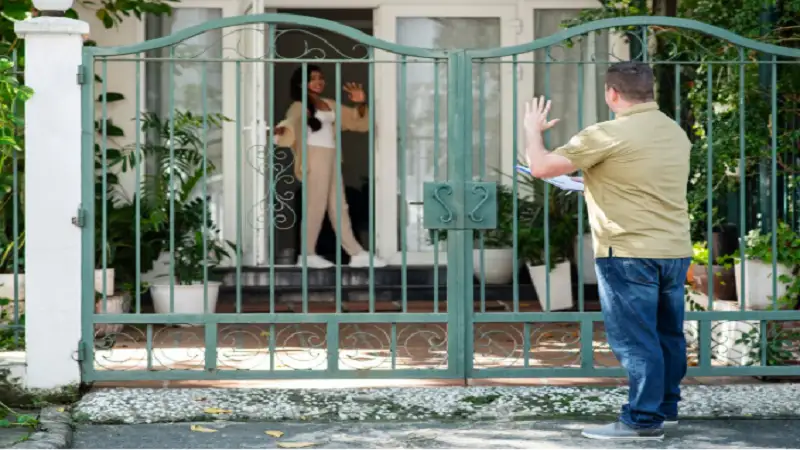
If outdoor security were a recipe, fencing would be the first ingredient you reach for. A clearly defined perimeter tells everyone where the space begins and ends.
It guides foot traffic, deters casual trespassing, and creates a natural boundary that keeps children safely within designated areas.
They can safely navigate a climbing wall, sit at picnic tables, or gather under park shade structures alongside other outdoor amenities.
When selecting fencing materials, you will want to weigh a few tradeoffs:
- Wood offers a classic look but requires regular maintenance to prevent rot and warping.
- Vinyl is low-maintenance and weather-resistant, though it can become brittle in extreme cold.
- Chain-link is cost-effective and highly durable, but offers less visual privacy.
- Aluminum strikes a strong balance by being rust-resistant, long-lasting, and visually polished.
For schools, parks, and HOA spaces, the gate is where security either holds or falls apart. Self-latching, lockable gates are non-negotiable in any setting where children are present.
A gate that swings open freely is an open invitation for a child to wander toward a parking lot or street. This is exactly the scenario every administrator lies awake worrying about.
If your space serves people with mobility challenges or disabilities, gate width and latch design matter beyond security. ADA-compliant entry points need to be wide enough for wheelchairs, have accessible hardware, and avoid configurations that create barriers.
Getting this right from the start saves time, money, and frustration. As a seasonal best practice, inspect your fencing at least twice a year to catch a small repair early.
| Important: A gate that swings open freely is an open invitation for a child to wander toward danger. Regularly check self-latching mechanisms to ensure they engage every single time the gate closes. |
2. Illuminate the Space with Motion-Detecting Lighting
Darkness is an opportunist’s best friend in any community area. Poorly lit outdoor spaces create the kind of low-visibility environment that invites vandalism and unauthorized access. This is especially true around playground structures, storage areas, and entry points.
Motion-sensor lighting solves this problem with simple logic. Suddenly, bright light is uncomfortable for anyone with bad intentions and purely inconvenient for everyone else.
According to research cited by the RAND Corporation and supported by community safety studies, improved exterior lighting can reduce outdoor property crime by as much as 20 percent in targeted areas.
For practical placement, prioritize these zones:
- All entry gates and access points serve as your first line of after-hours defense.
- Pathways and walkways need clear visibility connecting parking areas to the main space.
- Play structures and equipment clusters are common targets for vandalism.
- Perimeter edges require lighting along dark, less-trafficked fence lines.
If budget is a concern, solar-powered motion lights have become a genuinely viable option. Modern solar fixtures store enough charge to run through the night and require almost no ongoing maintenance. They are especially practical for spaces where running electrical wiring to every corner is not feasible.
There is a secondary benefit worth noting here since well-lit outdoor spaces do not just deter crime. They extend usability by naturally inviting more evening use. Security and community connection turn out to be more compatible than they might first appear.
| Key Insight: Research from the RAND Corporation indicates that strategic exterior lighting can reduce outdoor property crime by up to 20%. It is one of the most cost-effective security upgrades available for community spaces. |
3. Manage Landscaping for Clear Sightlines
This is the trick most people overlook, and it is one of the most effective. The concept comes from a discipline called Crime Prevention Through Environmental Design, or CPTED.
One of its core principles is natural surveillance, which involves designing and maintaining spaces so that legitimate users can easily observe what is happening around them.
The more clearly adults can see across a playground or park, the less appealing that space becomes for anyone planning something they should not be.
In practical terms, this means you should trim hedges and shrubs below window height. It is highly recommended to keep vegetation no taller than 3 feet near building windows or seating areas.
Prune lower tree branches so they do not create shaded canopies that block sightlines or obscure lighting. Clear dense vegetation from the areas immediately surrounding fencing, gates, and equipment clusters.
For schools and daycares, especially, overgrown landscaping is not just a security risk, but also a supervision liability.
If a teacher or aide cannot see across the playground from a single vantage point, that is a problem that no amount of staff presence will fully solve. Open, clearly maintained green space makes supervision far easier.
You do not have to sacrifice aesthetics to achieve this level of visibility. Strategic planting can actually enhance the security of a perimeter while looking beautiful.
Thorny species like hawthorn, barberry, or pyracantha planted along fence lines create a surprisingly effective natural deterrent. A beautifully maintained yard says quietly but clearly that people are paying attention here.
| Pro Tip: Follow the “3 and 7” rule for landscaping: keep shrubs trimmed to 3 feet and tree canopies pruned up to 7 feet. This creates a clear window of visibility for maximum natural surveillance. |
4. Anchor and Secure Outdoor Equipment and Furniture
Here is a scenario that plays out more often than most organizations realize. Someone wanders into a park or schoolyard after hours and finds that the picnic tables are not bolted down or the portable storage box is unlocked.
What was meant to be a community asset becomes an easy target. It can even become a safety hazard when someone discovers that a displaced piece of equipment creates an unexpected danger.
Securing your outdoor equipment is both a theft deterrent and a risk management strategy. For permanent fixtures like benches, picnic tables, bike racks, and play structures, use concrete footings or ground anchors to ensure nothing can be easily moved or tipped.
According to federal safety handbooks, secure anchoring is a key factor to stable installation that must follow manufacturer specifications. The agency notes that each year, more than 200,000 children visit emergency rooms with injuries associated with playground equipment, making stable installation critical.
For semi-permanent items, heavy-duty cable locks or galvanized chain systems run through frame mounting points add a meaningful barrier. All movable goals and sports nets must always be anchored properly when not in use.
These anchoring methods work well for equipment that needs occasional repositioning for seasonal use or maintenance. For portable accessories like cushions or small toys, invest in a quality, weather-resistant outdoor storage unit with a strong lock.
When selecting outdoor furniture and play components, quality makes a measurable security difference. Heavier, commercial-grade equipment is inherently harder to displace or damage than lighter residential alternatives.
Installations built to commercial specifications are engineered for permanence and durability in high-use public settings. That kind of structural integrity directly supports long-term security by making the equipment itself resistant to easy tampering or removal.
| Key Insight: Commercial-grade equipment provides inherent security. Heavier materials and professional anchoring systems make theft or tampering significantly more difficult compared to lighter, residential-style alternatives that are not designed for public use. |
The Bottom Line
Securing your yard or community outdoor space is a cohesive strategy. Fencing defines the boundary and establishes control over who enters and exits.
Lighting removes the cover of darkness that opportunists depend on to stay hidden. Smart landscaping maintains the open sightlines that keep everyone visible and safe.
Anchored, high-quality equipment protects your investment while eliminating the vulnerabilities that loose or movable items create. Underneath all four tricks is something simpler, which is a belief that the people who gather in your outdoor space deserve to feel genuinely safe.
When a parent drops their child off at a playground, they are extending real trust. When a family spreads out in a park or HOA common area, they are investing in a sense of belonging.
Getting outdoor security right honors that trust in a meaningful way. These improvements do not require an overnight overhaul or an unlimited budget.
Pick the trick that addresses your most immediate concern and start there. Small, deliberate steps build toward spaces where kids can explore freely, families can connect without worry, and communities can grow securely.