
The facade is the decision that everything else has to live with.
Unlike an interior surface, which can be repainted or replaced with relatively modest effort, the material you tile a building’s exterior with is a long-term commitment, measured not in years but in decades.
It shapes how the building reads from the street, how it weathers through the seasons, and whether it gains character or simply ages.
Material selection for exterior wall tile is not a purely aesthetic question.
Every option on this list has a different profile of UV resistance, water absorption, freeze-thaw tolerance, and installation complexity.
Understanding those differences is what separates a specification that holds up from one that requires remediation three winters in.
The seven materials below represent the most design-credible and performance-validated options available for residential and commercial exterior cladding.
For architects and homeowners working at the intersection of material integrity and visual ambition, the range of weather-resistant outdoor wall tiles for exterior use available through OUTERclé’s Facade collection represents a useful starting point for understanding what handcrafted, exterior-grade tile can actually deliver at the level of both performance and design.
1. Brick tile
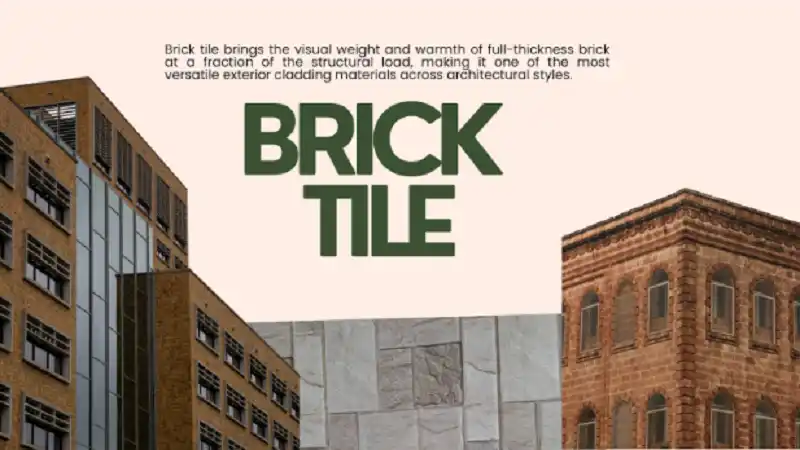
Brick tile is one of the oldest and most proven exterior cladding materials, and its continued relevance is not nostalgia: it is performance.
A fired clay body at the density of brick is inherently resistant to moisture penetration, freeze-thaw cycling, UV degradation, and impact. The variation in color and surface character that comes with handcrafted brick tile, where no two units are identical, is the quality that makes a brick facade read as genuinely substantial rather than decorative.
Best for: traditional and contemporary residential facades, courtyard walls, garden boundary cladding. Works particularly well where the adjacent architecture already includes brick, stone, or timber, as brick tile integrates naturally into mixed-material compositions.
2. Terracotta tile
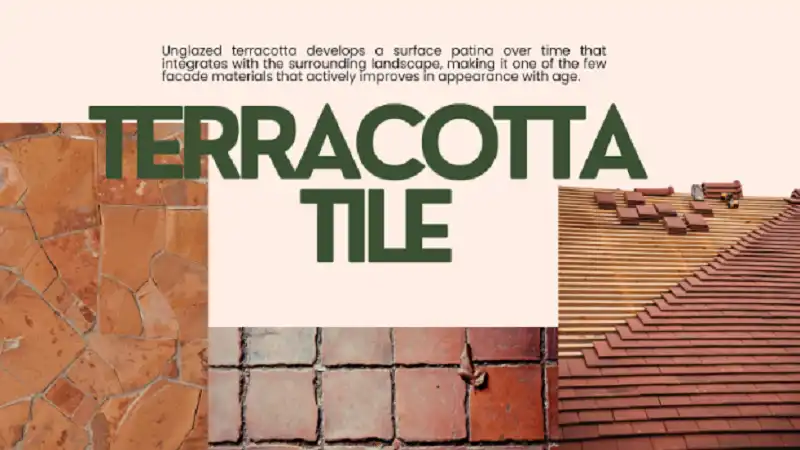
Terracotta is fired clay at a lower temperature than porcelain, giving it a warmer surface, a more organic texture, and a slight porosity that, when properly sealed, allows the tile to breathe without absorbing damaging moisture.
The characteristic warmth of terracotta, its range from pale sand through rich burnt orange to deep ochre, is produced by the natural iron content of the clay rather than by applied colorants, which means UV exposure does not fade it in the way it would a surface-treated tile.
Best for: Mediterranean, Spanish colonial, and contemporary warm-climate architecture. Particularly effective on south-facing or sunny facades where the material’s thermal mass and warm tonality are assets rather than afterthoughts. Requires appropriate sealing in climates with high rainfall or freeze-thaw exposure.
3. Cement tile
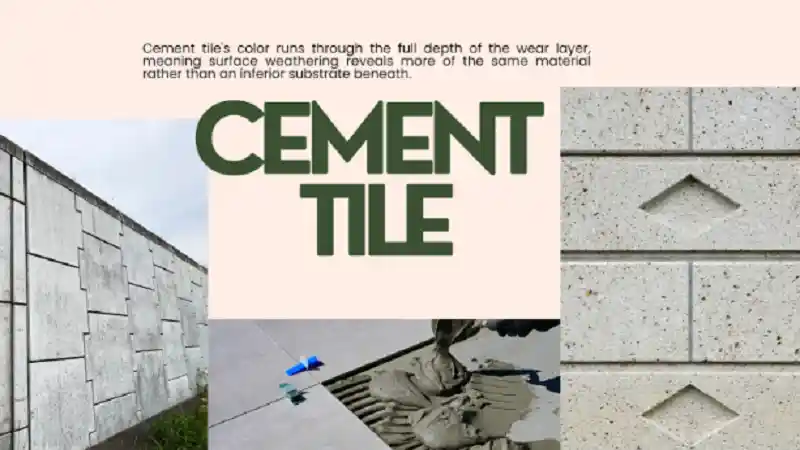
Cement tiles are produced through a hydraulic pressing process using mineral pigments, cement, and marble powder, without firing.
The color is integral to the full depth of the wear layer rather than applied to the surface, which gives cement tile a durability profile that fired glazes cannot match for surface integrity under weathering.
As the surface weathers, it develops a patina rather than losing color. This is the material that architects reach for when they want a facade surface with genuine depth and a handmade character that cannot be approximated by industrial production.
Best for: contemporary residential exteriors, courtyard walls, and covered outdoor areas where the tile is partially sheltered. Cement tile requires sealing for exterior use and should be specified with appropriate impregnating sealers rated for outdoor exposure.
4. Stone and marble tile
Natural stone, including limestone, sandstone, slate, and granite, brings a density and through-body composition that no manufactured tile can fully replicate.
The variation in veining, color, and surface character is geological rather than designed, which gives stone facades a visual richness that reads as genuinely authoritative.
For facade applications, honed and bush-hammered finishes are preferred over polished: they provide better slip resistance where relevant, are less susceptible to surface marking, and tend to age more gracefully under UV and rain exposure than highly polished surfaces.
Best for: high-end residential exteriors, commercial facades, and architectural projects where material pedigree is part of the brief. Stone selection should be matched to climate: darker stones with high iron content can oxidize over time, while lighter limestones are susceptible to acid etching in environments with significant air pollution or proximity to chlorinated water.
5. Terrazzo tile
Terrazzo is a composite material, typically marble or stone aggregate set in a cement or resin matrix, with a long history in both interior and exterior applications.
Its durability profile is exceptional: the aggregate runs through the full thickness of the tile, the surface is inherently dense, and the design possibilities range from restrained tonal blends to boldly patterned compositions.
For exterior use, cement-matrix terrazzo is generally preferred over resin-matrix, as it is more dimensionally stable under the thermal cycling that characterizes outdoor exposure.
Best for: contemporary and mid-century modern residential facades, commercial cladding, and feature walls where a distinctive surface with strong material character is the design objective. Terrazzo performs particularly well in covered exterior applications and in climates with moderate rather than extreme temperature ranges.
6. Ceramic tile
Ceramic tile covers a wide range of products, from mass-produced uniform glazed tiles to handcrafted artisan surfaces with significant glaze variation and surface character.
For exterior facade use, the relevant specification parameters are water absorption rate and freeze-thaw rating.
Exterior-rated ceramic tile with an absorption rate below 3% is appropriate for covered or warm-climate exterior applications; below 0.5% for climates with genuine freeze-thaw exposure. Matte and satin glazes perform more reliably under long-term UV exposure than high-gloss finishes, which can yellow or fade over time in direct sun.
Best for: covered exterior walls, garden feature walls, and warm-climate facade applications. Handcrafted ceramic tile is particularly effective on smaller-scale facade projects and boutique residential exteriors where surface character and artisan quality are priorities over standardized uniformity.
7. Glass tile
Glass tile is the most demanding specification on this list, and also the most visually distinctive. The reflective quality of glass means that a glass-clad facade behaves differently at different times of day and in different weather conditions, catching morning light in a way it does not catch afternoon shade.
For exterior use, glass tile must be rated specifically for outdoor conditions, with verified thermal shock resistance, UV stability, and freeze-thaw performance where relevant.
Installation requires a substrate with minimal movement tolerance, as glass has limited flexibility and can crack if the substrate shifts.
Best for: contemporary architectural feature walls, commercial facades, and accent cladding where visual dynamism is a deliberate design objective. Glass tile is rarely the right choice as a primary cladding material over large facades, but as an accent surface or feature element, it has a visual impact that no other material produces.
How to choose between them
The seven materials above are not interchangeable, and the right choice is always a function of climate, architectural context, and the specific visual objective.
The most common specification error is prioritizing appearance over performance compatibility. Selecting a material that looks right in a showroom without confirming that its absorption rate, freeze-thaw rating, and UV stability match the conditions of the actual site.
Getting that sequence right, performance first, aesthetics second, is what distinguishes a facade that holds its design intent over twenty years from one that requires remediation within five.
If you are still at the visualization stage, exploring how different materials read on your specific property before committing to a specification is a step worth taking, and one that increasingly does not require waiting for physical samples. See More