
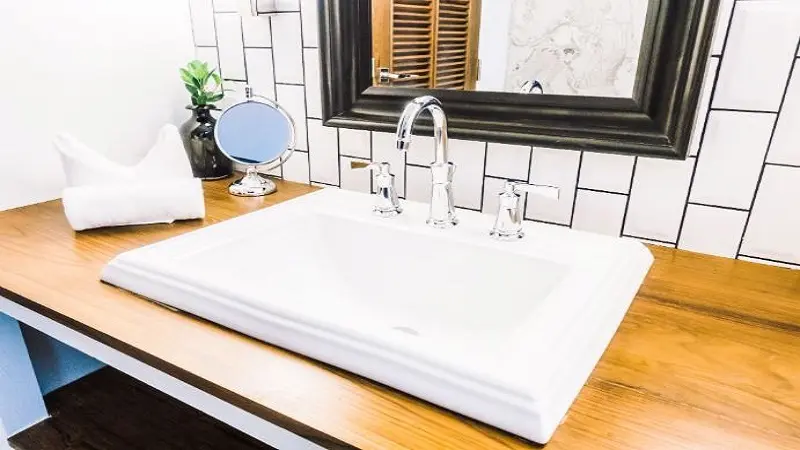
If you’re redoing a bathroom in Virginia, the countertop question comes up fast: quartz or granite? Both look great in a showroom. Both cost serious money. And both will get blamed if something goes wrong two years in.
The honest answer is that neither material is universally better. The right pick depends on your bathroom’s conditions, your cleaning habits, and how long you plan to stay in the house. Here’s how they actually compare where it matters.
Humidity Is Virginia’s Hidden Variable
Virginia bathrooms deal with real humidity swings, especially from May through September. That matters for stone.
Granite is porous. Without proper sealing, moisture can work into the surface over time, leading to staining or, in the worst cases, harbouring bacteria around the sink area. Well-sealed granite handles it fine, but sealing is maintenance you have to stay on top of, typically once a year.
Quartz is engineered and non-porous. No sealing needed, ever. For a bathroom vanity top in Virginia that gets daily steam and splashing, that’s a real advantage. You don’t have to remember to do anything.
What Actually Holds Up Under Daily Use
Bathroom vanity tops take daily abuse: toothpaste, cosmetics, hair dye, and nail polish remover. Each material responds differently.
Granite holds up well against heat and most household products, but acidic cleaners can etch the surface if left on too long. A splash of nail polish remover that sits overnight is a problem.
Quartz handles those products better because the resin binders in the surface don’t react to most household chemicals. The tradeoff is heat sensitivity. Quartz can discolour or crack if you set a hot styling tool directly on it, something granite doesn’t care about at all.
Both scratch, though it takes real effort with either. Day-to-day bathroom use won’t do it.
Granite Countertops in Fredericksburg, VA: What to Expect
If you’re shopping for granite countertops in Fredericksburg, VA specifically, a few things are worth knowing. Local suppliers in the Fredericksburg area typically carry a wider slab selection than big-box stores, and many offer custom edge profiles and on-site templating. That matters for vanity tops where sinks and faucet holes need precise cuts.
Granite slabs are unique, which is part of the appeal. Two slabs from the same quarry won’t look identical. If you want something that photographs well and has natural variation, granite delivers that in a way quartz can’t.
Pricing varies, but granite from a local Fredericksburg stone yard generally runs competitive with quartz when you factor in that it doesn’t need replacement every decade due to surface wear. Granite cut and installed correctly can last the life of the house.
Which Looks Better for Bathroom Vanity Tops in Virginia?
This is subjective, but there are patterns. Older homes with traditional cabinetry tend to look better with granite’s natural variation. Modern or contemporary bathrooms with flat-panel cabinetry often suit quartz’s clean, consistent look.
Quartz manufacturers have got good at mimicking stone. Some products are convincing. But if you put them side by side with real granite, most people can tell. If authenticity matters to you, granite wins.
For bathroom vanity tops in Virginia homes that will be listed for sale, both perform well with buyers. Granite carries stronger name recognition with older buyers; quartz appeals to buyers who want low maintenance.
Cost, Installation, and Lifespan
Quartz and granite land in similar price ranges for vanity tops, generally between $70 and $150 per square foot installed, depending on thickness, edge profile, and complexity. Neither is cheap.
Granite requires annual sealing. Quartz doesn’t. Over ten years, that’s a meaningful time difference if you’re doing it yourself or a money difference if you hire it out.
Both need professional installation. Vanity tops with undermount sinks require precise cuts that DIY installation usually doesn’t handle well. A local stone fabricator with experience in bathroom vanity tops is worth the cost.
Granite lasts longer under ideal conditions. Quartz can show UV yellowing over decades near windows, though bathroom windows are typically small and indirect.
Frequently Asked Questions
Q: Do I need to seal quartz bathroom vanity tops in Virginia?
No. Quartz is non-porous and doesn’t require sealing. That’s one of its main selling points for bathrooms, which deal with constant moisture.
Q: How often should I seal a granite countertop in Fredericksburg, VA?
Once a year is the standard recommendation. Test it by dropping water on the surface. If it beads up, you’re fine. If it absorbs, seal it. Some granite varieties are denser and need sealing less frequently.
Q: Can quartz crack in a bathroom?
It can, but it’s uncommon from normal use. The more likely damage is from hot styling tools placed directly on the surface, which can cause discolouration or fracture near the point of heat contact.
Q: Is granite or quartz better for resale value in Virginia homes?
Both perform well. Granite has stronger recognition with buyers in traditional markets. Quartz markets well to buyers prioritising low maintenance. Neither will hurt a sale; the condition and installation quality matter more than the material.
Q: Where can I see granite slabs in person before buying?
Any reputable stone yard in the Fredericksburg area will let you view slabs. This is worth doing for granite specifically, since every slab looks different. Photos don’t capture the actual depth and movement of the stone.
Granite Maker: Your Destination for Countertops
Granite Maker is a Fredericksburg, Virginia stone fabricator specialising in granite and quartz countertops for kitchens and bathrooms. They handle everything from slab selection to custom cutting and installation. Local homeowners across the Northern Virginia region use them for countertop replacements and new construction projects. See more