
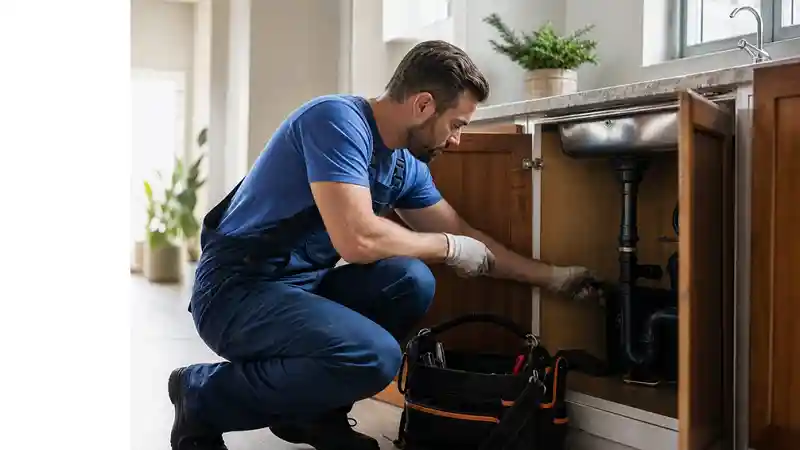
Whether you’re dealing with a burst pipe, a water heater that’s started to leak, or your basement drains backing up, time is of the essence. Here’s a quick guide to help you know what to do in the first hour after discovering a plumbing emergency.
First, stop the flow and check the risks
Minutes 0-10: Stop the flow and make the area safe
The first step after discovering a plumbing emergency is figuring out if water is still pouring into your home or business. If you notice a burst pipe, dripping faucet, or other water-related plumbing emergency, shut off the valve closest to the affected area (as long as it’s easily accessible and in working order). If this doesn’t solve the problem, shut off your home’s main water supply. (Property managers: Be sure to educate your tenants and on-site maintenance staff on the location of your building’s main water shutoff valve!)
If your drains are clogged and backing up, avoid flushing toilets, taking showers, running your dishwasher, or using your washing machine’s drain cycle. Sending more water down your drains could send sewage spewing out of your home or business’ lowest drain.
Once you’ve stopped any additional water from entering your home or business, take a look around to see if any outlets, electrical panels, home appliances, or furnaces could be at risk for electrocution. Avoid walking through standing water to unplug appliances! If you can access your electrical panel from a dry area, consider shutting off the electricity.
What to look for: Sewer backup vs. stormwater intrusion
If you notice your pipes have burst in Boone County this winter, your top priorities should be shutting off your home’s water supply (if necessary) and protecting your floors, walls, and any nearby items from additional water damage.
If you notice your basement is flooding after a storm in Old Southwest, figure out as quickly as possible whether the water is sewage backup or stormwater seepage. This distinction can have a big impact on both the safety of the situation as well as the steps you’ll need to take for proper cleanup.
Keep the damage from spreading
Residential plumbing system
What NOT to do during a plumbing emergency
- Run a household vacuum over standing water
- Turn on a leaking water heater again until the area is thoroughly investigated
- Assume everything is fine if your backed-up drains start draining again
- Take apart plumbing during an active water emergency
- Pour drain cleaner down clogged drains
Minutes 25-40: Decide whether it can wait
Some plumbing emergencies are more pressing than others. If you’re in Columbia, Missouri, and need reliable, fast assistance, Columbia Missouri Rapid Response Plumber Services can help address urgent plumbing issues. If you have any of the following situations, you’ll likely want to call a plumber for same-day service:
- You can’t stop the water from flowing
- You can’t figure out how to stop the water from flowing
- Your drains are backing up with sewage
- Your water heater tank is leaking
- A frozen pipe has burst
Make the repair visit easier
Minutes 40-60: Gather useful details for the repair visit
It may be helpful to jot down some notes while you’re waiting for your plumber to arrive. This might include answering these questions:
- When did the emergency start?
- Was a particular faucet, appliance, or fixture running at the time?
- Is the water clean or sewage-tinged?
- Did turning off the main shutoff valve stop the leak?
- Where did water start seeping into the home or business?
- If the emergency involves your water heater, where do you suspect the leak is coming from (i.e. top of tank, pressure relief valve area, bottom of tank, etc.)? (Again, don’t stick your hands under the unit or touch hot surfaces to figure this out!)
- Do you have easy access to your water heater drain valve, shutoff valve, and other components, or would you need to move heavy objects/shelving units to get to these areas? (If it’s safe to do so, it’s helpful to clear a path to these components before your plumber arrives.)
Other tips to consider while you’re waiting for your plumber to arrive:
Keep children, guests, and pets away from the area until the plumber arrives. If you’ve turned off your main water shutoff valve, consider taping a note to a sink or toilet so people don’t use the fixture and wonder why there’s no water. If you suspect your water heater tank has failed, make sure to turn off the water shutoff valve for your water heater. If you have an electric water heater, turn off the breaker (from a dry area!). If you have a gas water heater, don’t attempt any repairs or try to relight the unit yourself!
After the immediate rush
Ideally, you’ll have stopped the water intrusion (keep https://www.epa.gov/mold/brief-guide-mold-moisture-and-your-home open if you’re going to need the details), made the area safe, and taken photos/jotted down notes to help your plumber troubleshoot the issue. Now it’s just a matter of getting the issue repaired and making sure everything dries out properly to avoid secondary damage! See More