
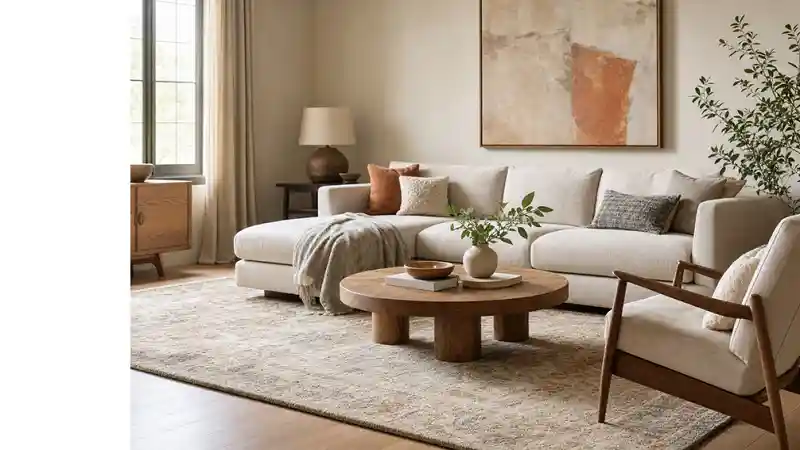
Often rugs are an afterthought in Home decoration projects. It’s often one of the last things that homeowners will buy, after paint, furniture, window treatments, etc. have been purchased.
Buying textiles for your Home should be approached with an understanding of material, construction, scale, and use. Especially for the design-minded tech lover, there’s a chance to do some detective work on the sourcing of these items, instead of just glazing over the gorgeous product photos.
Room and Use
Is the rug for a high traffic entryway? Does it need to withstand pets or lots of guests in the living room? Will it lay in a bedroom and you want something plush and soft? Where will the rug be located? Under a dining room table, in an entryway, in a high traffic area? Do you need a flat weave or low pile so it doesn’t get in the way of chairs, doors or walking? Will it get lots of sun? Can it be professionally cleaned?
Other Elements
What are the colors, shapes and textures of the furniture, artwork, and accessories in the room? How will the rug complement or contrast the other elements? Will the rug’s texture and color play well with the sheen of ceramics, metal accents, wood finishes, upholstery fabrics and so on? Will it make these materials look softer, warmer, more relaxed, more layered? More stark, austere, formal?
Answering these questions will help you narrow down choices, without feeling like you’re making a knee-jerk decision on color or pattern. It’s not just about finding a pretty rug, but one that will continue to look beautiful in your changing space.
Fiber and Construction
Many rugs use a combination of natural and synthetic fibers, each bringing its own advantages to the finished piece, as described at https://www.britannica.com/technology/rug-and-carpet. Natural fibers are prized for their beauty and complexity, while synthetics can offer performance characteristics (stain and wear-resistance, easy-clean, etc.) in certain situations. Neither type of fiber is better, it just depends on what you’re looking for and the intended use of your rug.
Rugs are made using many different hand and machine techniques. Some rugs are highly consistent and uniform in size and design, while others may exhibit slight irregularities due to being hand finished. Knowing how your rug was made can help you understand what to expect in terms of shedding, color variation, wear and performance.
Rug fibers and woven construction
Scale and Samples
Rugs help visually anchor furniture, so choosing the right scale for your space is important. A rug that’s too small can make even perfectly chosen furniture look disjointed in a room. As a rule of thumb for rugs in living areas, consider a rug large enough to accommodate at least the front legs of major pieces of furniture (an 8’x10’ piece may work well in many situations). Measure out the rug size you’re considering in painter’s tape or newspaper on your floor, and walk around the perimeter to make sure it’s not impeding foot traffic.
If you have beautiful floors and a pared-down decorating sensibility, consider a smaller rug to soften a seating arrangement, or simply enjoy your gorgeous floors!
If you’re shopping online, make sure you’re educated about the product before you buy. The search for Heirloom Quality Rugs Online makes sense if you are furnishing for the long term rather than looking for a temporary floor covering. Pay particular attention to fiber content, construction, color, size, country of origin and care instructions.
Material Samples
If you’re shopping online, keep in mind that you’re viewing the rug on a screen, which may be displaying colors differently than they actually are (that “cream” rug might look more yellow, white, gray, warm or cool once it arrives). If possible, especially with larger rugs, order a sample so you can see how the rug’s color and pattern will work in your space (and make sure it’s not too busy against your other furnishings!).
Check out how the color changes against different elements (walls, floors, fabrics, wood tones, etc.) in your space, and in different kinds of lighting (daylight, incandescent, fluorescent, morning, afternoon, evening). Running your hands over a rug sample will also tell you a lot about the texture and construction of the piece, which you can’t glean from looking at photographs.
Color and Order Details
When choosing rugs, think about the overall look you’re going for and how the rug will fit in with other pieces you own or plan to purchase. Your rug doesn’t have to exactly match anything else in your palette, but it should relate in some way (echoing the undertones of your wood floors, toning down a strong wall color, a muted version of your accent color, etc.).
If your space has lots of pattern (wallpaper, strong graphic prints, etc.) you may want to consider a more solid color or less visually busy rug to give the eye a place to rest. Similarly, if you’re going for a quieter, more subdued look overall, a busy rug pattern may be too much.
Before Ordering
Make sure you have all of the pertinent information about your rug (fiber content and construction, country of origin, color, size (including fringe, if applicable), care instructions, whether a rug pad is recommended, etc.) before ordering, and save this information with your project notes for future reference. See More