
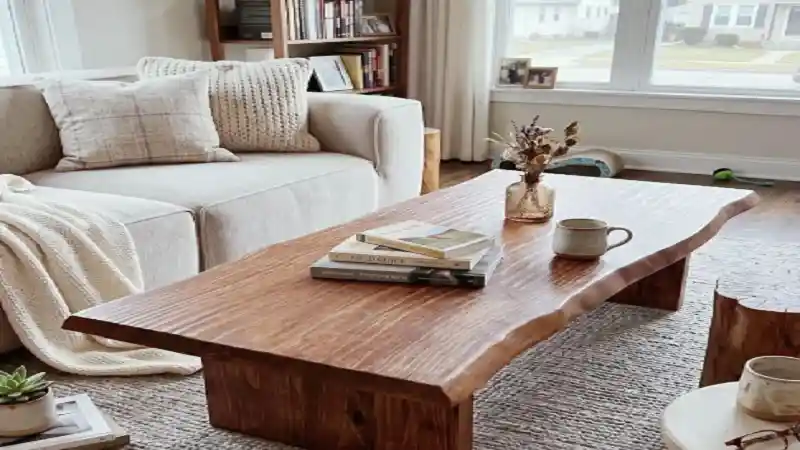
Wooden coffee tables remain a popular choice for living rooms thanks to their natural appearance, versatility, and timeless appeal. Beyond providing a convenient surface for drinks, books, and everyday essentials, a coffee table can become a central design element that brings the entire seating area together.
Today, homeowners are moving toward furniture that combines natural materials, distinctive shapes, and practical functionality. From solid wood slabs to minimalist designs, several wooden coffee table trends are shaping modern interior spaces.
1. Natural Wood Coffee Tables with Unique Grain Patterns
Natural wood furniture continues to attract homeowners who appreciate organic textures and authentic materials. Unlike mass-produced surfaces with uniform finishes, solid wood coffee tables showcase individual grain patterns, knots, and natural color variations.
Walnut, white oak, ash, maple, and cherry are popular choices for coffee table construction. Each wood species offers a different appearance, allowing homeowners to find a style that complements their existing furniture.
Natural finishes such as hardwax oil and polyurethane can also enhance the wood’s appearance while providing surface protection. Whether paired with neutral upholstery or darker interior elements, a natural wood coffee table adds warmth and character to a living room.
2. Live Edge Coffee Tables for an Organic Look
One of the most distinctive trends in wooden furniture is the use of natural slab edges. Instead of cutting every side into straight lines, this design preserves the original contours of the tree, creating a more organic tabletop shape.
A live edge coffee table highlights the natural grain, irregular edges, and unique characteristics of solid wood. Since every slab develops differently, each table has its own appearance and visual identity.
These tables work particularly well in rustic, farmhouse, industrial, and modern organic interiors. Homeowners can choose wooden bases for a cohesive natural look or metal legs for a more contemporary contrast.
For those who appreciate handcrafted furniture, live edge designs offer something beyond ordinary coffee tables: a natural feature that makes each piece visually distinctive.
3. Round and Oval Wooden Coffee Tables
Curved furniture designs are becoming increasingly popular in modern living rooms. Round and oval wooden coffee tables soften the straight lines commonly found in sofas, cabinets, and other furniture.
A round coffee table works especially well with sectional sofas and compact seating arrangements. Its curved shape allows people to move around more easily while creating a balanced focal point in the room.
Oval designs offer a similar visual softness while providing a larger tabletop surface. When choosing between these shapes, homeowners should consider the sofa dimensions, available floor space, and walking clearance.
Light-colored wood can create an airy appearance, while walnut and darker finishes provide a stronger visual presence.
4. Rustic Wooden Coffee Tables with Natural Character
Rustic furniture remains a popular choice for homeowners who prefer warm, relaxed, and inviting interiors. Rustic wooden coffee tables often feature thick tabletops, visible grain patterns, natural imperfections, and simple construction.
Rather than hiding every variation in the wood, these designs embrace knots, color differences, and textured surfaces as part of their appeal.
Rustic coffee table complement farmhouse living rooms, country homes, cabins, and lodge-inspired interiors. Pairing them with linen sofas, woven rugs, leather furniture, and natural decorative accessories can create a cohesive and comfortable atmosphere.
The key is choosing a table with the right proportions and wood finish so it complements the surrounding furniture without overwhelming the space.
5. Wood and Metal Coffee Tables
Combining natural wood with metal is another popular direction in contemporary furniture design. The contrast between warm wood grain and the clean lines of metal creates a balanced look that works across several interior styles.
These coffee tables often feature solid wood tops supported by steel or iron bases. Common leg designs include U-shaped frames, X-shaped supports, trapezoidal legs, and rectangular metal structures.
This combination is particularly suitable for industrial, modern rustic, and contemporary living rooms. Homeowners can also customize the metal finish and tabletop color to match existing furniture.
Besides appearance, construction quality matters. A stable metal frame, properly secured joints, and durable surface finishes help ensure the table performs well during everyday use.
6. Custom-Made Wooden Coffee Tables
Personalization is becoming an important consideration when choosing living room furniture. Instead of selecting standard sizes and designs, more homeowners are exploring custom-made coffee tables that better suit their spaces and preferences.
Custom furniture allows buyers to choose the wood species, tabletop dimensions, shape, base design, and finish. This flexibility is especially useful for rooms with unusual layouts or homeowners looking for a distinctive furniture piece.
For example, Tailor Wood Haven specializes in handcrafted wooden coffee tables, including natural live edge designs. Customers can discuss their preferred materials, dimensions, and construction details with the workshop before production begins.
This approach makes it easier to create a coffee table that reflects individual preferences while fitting the practical requirements of a living room.
7. How to Choose the Right Wooden Coffee Table
Following furniture trends is useful for discovering new styles, but choosing the right coffee table requires considering your actual living space.
Start by measuring the seating area and comparing the table dimensions with your sofa. Ideally, the tabletop should be around the same height as or slightly lower than the sofa seat. Leave enough space between the table and surrounding furniture for comfortable movement.
Next, consider the wood species and overall design. Walnut offers rich, darker tones, while white oak and ash provide lighter appearances. If you prefer a more organic style, natural slab designs can introduce distinctive shapes and grain patterns.
Finally, pay attention to the surface finish and construction. A suitable finish helps protect the wood from everyday wear, while a well-built base provides stability. These details are just as important as the table’s appearance.
Final Thoughts
Wooden coffee table trends are increasingly focused on natural materials, distinctive shapes, and personalized designs. From solid wood and live edge slabs to rustic finishes and wood-and-metal combinations, there are plenty of options for different living room styles.
Rather than choosing a table simply because it is trending, consider how its material, dimensions, and design work with your existing furniture. A well-chosen wooden coffee table can bring warmth, functionality, and lasting character to your living space. See More