
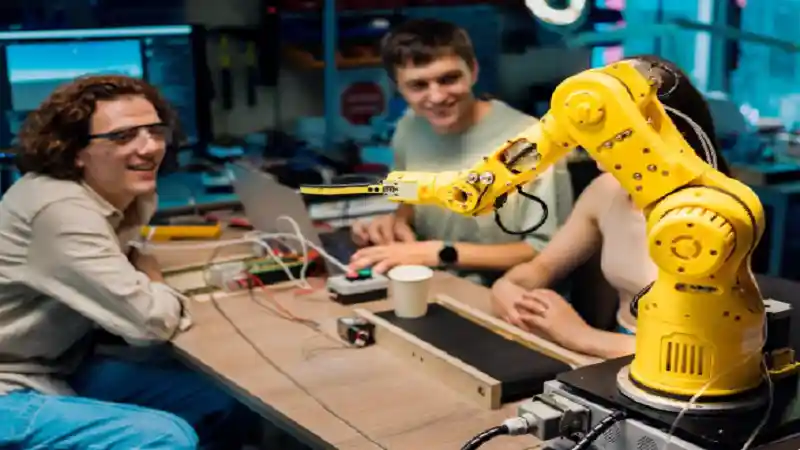
When you picture industrial automation, you probably imagine robotic arms, conveyor systems, or towering assembly lines humming along at full speed. What you likely do not picture are the small, unglamorous components tucked inside those machines that make all of that motion possible without tearing themselves apart. These are the silent innovators of the factory floor, and understanding them changes how you think about efficiency altogether.
One of the most overlooked categories of these components involves torque management. If you have ever wondered how a machine protects itself when a load suddenly jams or spikes beyond its normal operating range, the answer often lies in industrial slip clutch mechanisms. These devices allow a connected shaft to slip once torque exceeds a preset threshold, preventing catastrophic damage to gears, motors, and downstream equipment. You benefit from this kind of protection every time a production line avoids an unplanned shutdown, because the cost of that avoided failure is almost always greater than the part itself.
Why Efficiency Depends on Invisible Parts
You might assume efficiency is mostly about speed, but in reality, it is about consistency. When you run a facility, every unplanned stop costs you more than lost time. It costs you scheduling flexibility, energy that was already committed to a process, and sometimes scrapped material that cannot be recovered. Components that quietly absorb shock, manage torque, or regulate motion are doing the real work of keeping your line moving at a predictable pace. According to research published by the National Institute of Standards and Technology, unplanned downtime remains one of the highest hidden costs across manufacturing sectors, and much of it traces back to mechanical failures that could have been mitigated with better protective components.
The Role of Predictive Maintenance
As you modernize your operations, you are likely already hearing about predictive maintenance and condition monitoring. These strategies work best when paired with mechanical safeguards that reduce the frequency and severity of failures in the first place. Sensors can tell you when a bearing is wearing down, but a well-chosen mechanical safeguard can prevent that wear from becoming a full breakdown. The U.S. Department of Energy has published guidance on how combining monitoring technology with resilient mechanical design lowers total cost of ownership across industrial equipment, which is worth reviewing if you are building a long-term automation strategy.
Choosing the Right Components for Your Line
When you are selecting parts for a new or upgraded system, it helps to think beyond the headline specifications. You want to ask how a component behaves under stress, not just how it performs under ideal conditions. A motor rated for high output does you little good if the mechanism protecting it fails during the first overload event. You should also consider how easily a part can be serviced or replaced, since even the best components eventually need maintenance, and a design that requires a full line shutdown for a minor repair will cost you more over time than one built for accessibility.
Looking Ahead
As automation continues to advance, you will likely see even more emphasis placed on these supporting components rather than the flashier robotics that get most of the attention. The machines that run reliably for decades are rarely the ones with the most advanced software alone. They are the ones where every part, down to the smallest torque limiter, was chosen with intention. If you want your operation to be efficient in the long run, it pays to look beyond the visible technology and focus on the silent innovators keeping everything else running smoothly. See More