
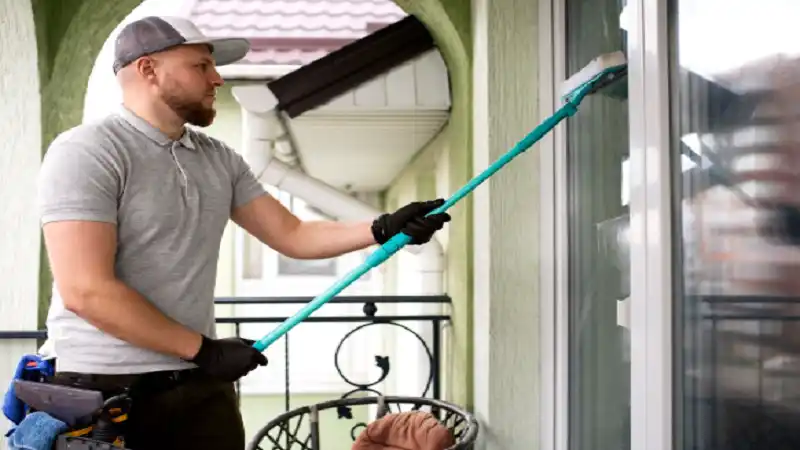
Pressure washing has a reputation for being a universal exterior solution. Dirty driveway, blast it. Stained siding, blast it. Algae-covered deck, blast it. The visual results are immediate and satisfying, and the assumption that more pressure equals better cleaning has become deeply rooted in how homeowners think about exterior maintenance.
The problem is that pressure washing damages a surprising number of surfaces. Vinyl siding can be punctured by aggressive pressure. Wood decks can be furred up and grain-raised. Roof shingles can have their granules stripped off. Mortar between bricks can be eroded. Window seals can be forced open. The same tool that cleans concrete perfectly can wreck the siding on the same house.
This is why professional exterior cleaning teams now distinguish between pressure washing and soft washing, and choose between the two based on the surface, not based on which tool happens to be in the truck. Understanding the distinction matters whether you are hiring pressure washing Toronto services or considering a DIY project. Here is what each method actually does and when each is the right choice.
What Pressure Washing Actually Does
Pressure washing uses high-pressure water, typically between 1,500 and 4,000 pounds per square inch, to physically blast contaminants off a surface. The cleaning happens because the force of the water is strong enough to dislodge dirt, grime, mineral deposits, and surface staining. Water alone does most of the work. Detergents play a supporting role at most.
This method is highly effective on surfaces that can withstand the force. Concrete, brick, stone pavers, masonry, metal fencing, and similar hard surfaces clean up dramatically under high-pressure water and recover from the treatment without damage. The visible difference between a pressure-washed concrete driveway and the same driveway before treatment can be striking.
The mechanism that makes pressure washing effective on hard surfaces is the same mechanism that damages softer ones. The pressure that strips dirt from concrete also strips paint from siding, removes protective coatings from decking, and forces water past seals on windows and doors.
What Soft Washing Actually Does
Soft washing uses low-pressure water, typically less than 500 pounds per square inch, combined with specialized cleaning solutions to remove biological contaminants chemically rather than mechanically. The cleaning agents kill algae, mold, mildew, and lichen at their roots, and a low-pressure rinse carries the dead biological material away.
This method is highly effective on surfaces that cannot withstand high pressure. Roof shingles, vinyl siding, painted wood, stucco, and aged or sensitive masonry all respond well to soft washing while being damaged by aggressive pressure. The cleaning result is often longer-lasting because the biological contaminants are killed, not just dislodged. Algae regrowth on a pressure-washed surface can occur within weeks. Algae regrowth on a properly soft-washed surface typically takes years.
Soft washing requires more chemistry, more training, and more careful handling than pressure washing. Wastewater runoff has to be managed responsibly. Nearby plants need to be protected or rinsed. The technician needs to understand which solutions work on which contaminants. Done poorly, soft washing can stain surrounding surfaces or damage landscaping. Done well, it cleans surfaces that pressure washing simply cannot handle.
Which Surfaces Need Which Method
The choice between pressure and soft washing comes down to the surface being cleaned and the contamination being removed. A working guide:
- Concrete driveways, sidewalks, and patios. Pressure washing. These surfaces hold up well to high pressure and benefit from the mechanical cleaning action.
- Brick walls and chimneys in good condition. Pressure washing at moderate settings. Older or deteriorating brick may need soft washing to avoid eroding mortar joints.
- Stone pavers and natural stone walkways. Pressure washing with appropriate nozzles. Some natural stones, particularly softer sandstones, may need lower pressure.
- Vinyl siding. Soft washing. High pressure can crack, dent, or perforate vinyl, and can force water behind the siding where it cannot dry.
- Wood siding and decking. Soft washing or very controlled low-pressure washing. High pressure raises wood grain and creates surface damage that accelerates weathering.
- Painted wood surfaces. Soft washing. Pressure washing can strip paint and force water into joints where it causes rot.
- Roof shingles. Soft washing. Pressure washing strips the protective granules from asphalt shingles, dramatically shortening roof life.
- Soft washing. Stucco has a porous surface that allows high-pressure water to penetrate and damage the substrate.
- Composite decking. Soft washing or very gentle pressure washing. Most manufacturers void warranties on composite decking that has been aggressively pressure washed.
- Windows and window frames. Neither, in most cases. Both methods can force water past seals. Window cleaning typically uses gentle hand cleaning or low-pressure pure water systems.
The Damage Patterns That Reveal Wrong-Method Cleaning
A surprising number of exterior surfaces have been damaged by well-intentioned but wrong-method cleaning. The damage patterns are often recognizable:
- Vinyl siding with small horizontal lines or punctures, often where the spray nozzle was held too close. The siding is no longer waterproof at those points.
- Wood decking with raised grain and a roughened surface that feels splintery underfoot. Pressure was too high, or the nozzle was held at the wrong angle.
- Brick walls with mortar that has eroded between bricks, leaving small gaps. The pressure was strong enough to remove cement-based material from the joints.
- Roof shingles with bare patches where the granules have been stripped away. The shingles will weather faster and lose their fire resistance.
- Window frames with water staining or interior damage. The pressure forced water through seals that were not designed to withstand that force.
When to DIY and When to Hire
Small concrete cleaning jobs with a rented or owned pressure washer are reasonable DIY work. The risk of damage is low, the equipment is straightforward to operate, and the learning curve is manageable.
Anything involving siding, roofs, painted surfaces, or sensitive masonry is generally better handled by a professional. The diagnosis required to choose the right method, combined with the equipment needed to soft-wash safely, takes the work out of DIY territory. The cost of a professional soft-wash is usually much lower than the cost of repairing damage from a misapplied pressure wash.
A professional team should be able to answer two questions clearly. What method are they recommending for each surface, and why? If the answer is “pressure washing” for every surface on the property, that is a signal to ask more questions. A real exterior cleaning professional uses both methods, and chooses between them based on what they are cleaning.
The Bottom Line
Pressure washing and soft washing are different tools for different jobs. Knowing which is right for which surface protects the exterior of the property from accidental damage and produces cleaning results that last longer than the alternative.
The next time exterior cleaning is on the schedule, the most useful question is not “how much will it cost?” but “which method are you using on each surface, and why?” The answer reveals more about the quality of the work being proposed than any quote ever will. See More