
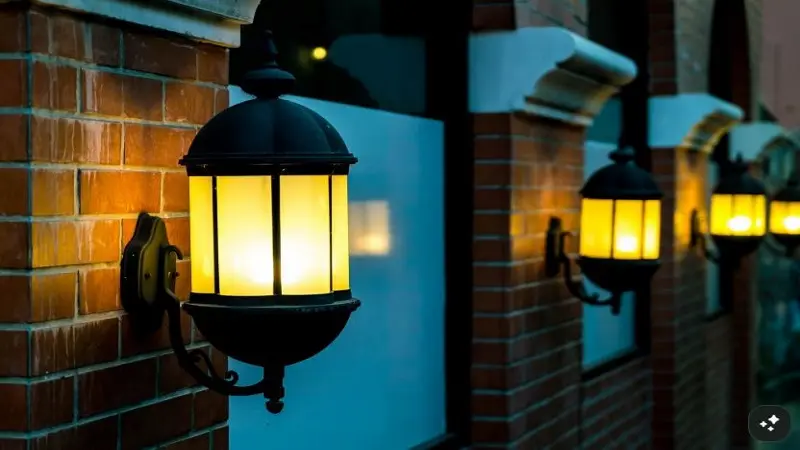
Outdoor lighting is the cheapest upgrade that changes how a house looks, feels, and stays safe after dark, yet most homeowners overspend on fixtures and underspend on placement. That mismatch is why the same budget can produce either a dull yard or a well-lit one. See also: Lumos Outdoor Lighting of Dallas/Ft. Worth.
Key takeaways
- Plan layers first: path, task, accent, and security lighting each do a different job.
- Choose warm color temperatures around 2700K to 3000K for a natural, inviting glow.
- Prioritize low-voltage LED systems for most residential projects; they are safer and easier to expand.
- Light the entry, steps, and walkways before decorative features.
- Use timers or motion sensors to cut energy use without sacrificing security.
Start with layers, not fixtures
Good outdoor lighting usually combines four layers. Path lights guide people safely between the driveway, door, and garden. Task lighting covers grills, steps, and doorways where you need to see clearly. Accent lighting highlights trees, columns, or stonework. Security lighting discourages intruders at entrances, side gates, and the back of the property.
Buying fixtures before deciding on layers is the most common mistake. A row of identical lights along a fence may look orderly but leave the door in shadow. Map the yard on paper first, marking where people walk, sit, and park, and then decide what each zone needs.
Compare the main system types
The right system depends on the size of the property, how much you plan to add later, and your tolerance for wiring work. Before choosing, look at how each option performs on the trade-offs that matter most to a typical single-family lot.
| System type | Typical installation | Strength | Main drawback |
| Low-voltage LED (12V) | DIY-friendly or installer | Safe to handle, easy to expand | Needs a transformer and planned runs |
| Line-voltage (120V) | Licensed electrician | High output for large areas | Higher installation cost and code requirements |
| Solar stake lights | Push into soil | No wiring | Weak output, poor performance in shade or winter |
For most single-family homes, low-voltage LED is the sensible default. A typical 12V system with a 300-watt transformer can power roughly 20 to 25 small LED fixtures, depending on their draw, which is enough for a front walkway, entry, and a few accent points. Check the transformer rating against the total fixture wattage before buying, and leave about 20 percent headroom for future additions.
Pick color temperature and brightness deliberately
Color temperature matters more than most people expect. Lights at 2700K to 3000K look warm and match the glow of indoor incandescent bulbs, which suits brick, wood, and stone. Anything above 4000K looks clinical and can make a yard feel like a parking lot. Brightness is measured in lumens; for paths, around 100 to 200 lumens per fixture is usually comfortable, while security floodlights often need 700 lumens or more.
Aim fixtures downward and shield the bulb from eye level. Glare is the most common complaint about outdoor lights, and it also makes it harder to see the very areas you are trying to illuminate.
Plan wiring and controls before you dig
Run cable before you install fixtures. Bury low-voltage wire at least 6 inches deep, or deeper where it crosses lawns that get aerated, and use direct-burial rated cable. Keep splices inside waterproof connectors. Timers and photocells are inexpensive and can cut nighttime runtime by half or more, while motion sensors suit side yards and driveways where lights only need to come on when someone is present.
Plan the controls early. If you add a smart controller later, it is far easier to route the wire now than to dig up a finished lawn.
If you would rather have a professional design the layout and handle permitting, a local specialist such as Lumos Outdoor Lighting of Dallas/Ft. Worth can assess the property and recommend a system that fits the house. For broader planning of the build itself, the guide to What Should First-time Home Builders Know Before Starting Construction covers the sequencing questions that affect where conduit and power should go.
Consider water and site conditions
Water is the hidden enemy of outdoor electrics. Fixtures should carry an IP65 rating or higher, and any location where the ground stays wet for long periods needs extra attention to drainage and connector sealing. In low-lying areas, fixtures set in standing water tend to fail within a few seasons. If your property sits in a flood-prone zone, the article on Flooding Awareness in South Florida: What Every Homeowner Should Know explains how water moves across lots and why it matters for placing equipment.
Know the real risks before you start
Line-voltage work carries genuine danger. Cutting into a live 120V circuit or burying cable without the required depth can cause electrocution, fire, or failed inspections that complicate a home sale. Check local permit rules before any trenching, and call before you dig so underground utilities are marked.
Even low-voltage systems can be installed wrong. An undersized transformer overheats, and loose connections draw current that causes voltage drop, leaving the far end of a run dim. If you are unsure, pay for a test of the completed circuit rather than discovering the problem after the lawn has been replaced.
Make the sensible choice and phase the rest
Start with the entry, steps, and main walkway, install a warm, shielded low-voltage system with a timer, and leave conduit or spare transformer capacity for accent lighting later. This approach spends the budget where safety and daily use matter most, and it keeps future expansion affordable. Lighting a whole yard at once rarely pays off; lighting the routes you actually use every night almost always does.
Frequently asked questions
Do I need a permit for outdoor lighting?
Low-voltage systems often do not, but line-voltage work usually does, and rules differ by municipality. Check with your local building department before any trenching or new circuit.
How deep should low-voltage cable be buried?
Bury it at least 6 inches deep, and deeper where lawns are aerated. Use direct-burial rated cable and keep all splices inside waterproof connectors.
What color temperature is best for a home exterior?
Choose 2700K to 3000K for a warm, inviting glow that suits brick, wood, and stone. Lights above 4000K tend to look harsh and clinical.