
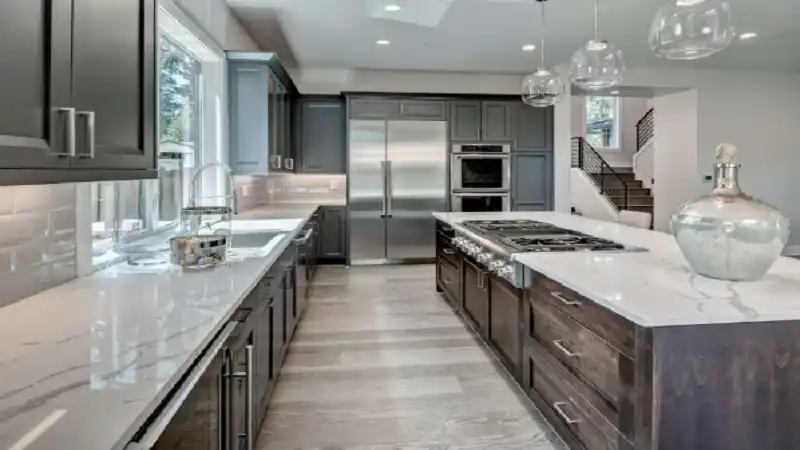
It’s not surprising that homeowners find a kitchen remodel one of the most stressful projects they’ve ever undertaken. It’s not only the budget, the decisions, and the disruption to daily life. But the strain typically occurs when things are done in the wrong order. If there’s a mistake made early on, it can have cascading consequences in terms of delays, rework, and unforeseen expenses later on.
Fortunately, all those headaches are totally preventable. By grasping the right order of a kitchen renovation, everything becomes more manageable, more predictable, and a lot less overwhelming. Big or small, you can skip the hassle of a complete gut job or stick to replacing just your cabinets or countertops, and this guide will show you each step of the way.
Start With the Plan, Not the Products
The worst thing homeowners do is opt for a cabinet style or countertop material they love without a plan. Before making finished decisions, it’s easy to go through showrooms and get the early urge to choose finishes, but it can be a costly decision to make them later on.
Before considering any cabinet door profile, you should determine the answers to these basic questions:
- How much money do you have to spend and how much flexibility do you have?
- Will you be rearranging the kitchen, or just maintaining the existing kitchen layout?
- Need to relocate plumbing, electric, and/or gas lines?
- What is the schedule to be followed, and is there any hard deadline to be adhered to?
- Who will be doing the work, and have you checked their credentials and availability?
For any decision that comes thereafter, these aspects will be the ones to have a solid base.
Phase 1: Design and Planning
Having established your budget and scope, it’s now time to go through the design in detail. This stage is the time when you have completed all your layout, materials, and product selections before any demolition operations take place.
Some of the important activities during this stage involve:
- Sitting down with a cabinet designer or remodeling professional to plan your design.
- Selecting a Cabinet style, finish, and configuration.
- Choosing a countertop material and edge profiles.
- Determining the size of the appliances, which influences the size of the cabinets.
- Complete lighting and switch positioning. Ensuring that all necessary permits are acquired before commencing work.
The time it takes for this phase can’t be underestimated! One of the most frequently cited reasons for stalled projects is to rush through design decisions. Interestingly, cross-referencing your material selections with the material palettes inside a dedicated bathroom remodeling showroom can open up new ideas for unified open-concept layouts. Taking this extra step ensures your structural finishes maintain a cohesive, high-functioning dialogue across adjacent living zones long before any construction begins. The less you do at the end, the more you’ll discover when the walls open up.
Finally, it is important to note that custom and semi-custom cabinets usually have a longer lead time than the stock cabinet options, and this could take from 6 to 12 weeks depending on the cabinet manufacturer. You’d like to order your cabinets before the demo and not have to wait for them to arrive.
Phase 2: Demolition
After the design is complete and permits have been pulled, materials ordered or confirmed, demolition can commence. This includes the demolition of old cabinetry, appliances, and sometimes floors and drywall.
Here are a few things to get ready during this period:
- Establish a temporary kitchen with the availability of a small appliance, a microwave, and a refrigerator.
- Cover doorways of adjacent rooms with plastic to prevent dust from spreading.
- Make arrangements for old materials that need to be disposed of safely in advance.
The demolition is generally fast; it usually takes one or two days to finish a regular kitchen.
Phase 3: Rough Work (Plumbing, Electrical, and HVAC)
All behind-the-wall work should be finished and inspected before the installation of new materials. This includes:
- Moving or retrofitting plumbing lines for sink and dishwasher
- Installing additional electrical wiring to use for outlets, appliances, and under-cabinet lighting
- Installing and modifying ductwork to range hoods or vents
- Carrying out any changes to the structure, including removing or adding a wall
This phase needs to be completed and verified before putting up drywall. It’s always better to take the time to do an inspection. Once drywall is installed, the inspector will pick up on a problem, and you will have to wall-cut into completed walls to correct.
Phase 4: Drywall and Flooring Prep
Once the rough-in work is done, walls can be closed, and the floor can be prepared. It is also a good time to repair any subfloor issues before the new floor is installed. There is one caveat about sequencing: Most contractors suggest installing new flooring after cabinets, not before.
Under cabinets that might be replaced in the future, or new cabinets installed over new flooring, can create leveling problems. This is not always the case when you use certain types of flooring, and installers have their preferences, so it is best to speak with your installer before installing.
Phase 5: Cabinet Installation
The day of the cabinets is one of the most thrilling days of a kitchen renovation. This is a space that is starting to come together after weeks of planning and preparation.
To make installation easy, there are a few things that should be prepared:
- The room should be clean, dry, and prepared
- Cabinets and hardware should be in place before crew arrival
- The floor should be flat, or shims should be provided to adjust for the flatness of the floor
The upper cabinets usually are installed before the lower cabinets to avoid working over the completed lower cabinets. The accuracy is important because cabinets must be level, plumb, and secured to wall studs. A professional installation crew will take the time to do it right, and the difference in the finished kitchen, both in appearance and performance, will be obvious.
Phase 6: Countertop Templating and Installation
Cabinets must be complete before countertops can be templated. A lot of homeowners are taken aback by this, and they think that they can coordinate the countertop crew to work at the same time as the cabinet crew.
This is because the sequence is important; countertop fabricators must take the time to template directly off of the cabinets to get an accurate measurement. It can make a difference in how the slab fits around corners, appliances, and walls if it is even slightly different than the original plan.
If done too quickly, this step results in gaps, uneven overhangs, and seams that are in the wrong places. Typical time to fabricate after templating is 1 to 2 weeks. The backsplash can be installed after the countertops are in place, as tile work may need to attach to the edge of the countertop.
Phase 7: Appliances, Fixtures, and Finishing Touches
The last step is to complete the cabinets and the countertops. This includes:
- Installing the sink, faucet, and garbage disposal
- Installing and wiring appliances
- Installing cabinet hardware, pulls, and hinges
- Finishing the backsplash tile and grout; installing lights and outlet covers
- Drywall, trim, and caulking fixes
This is also the time of the final inspections. After all the above is approved and finished, your kitchen is ready to use!
A Few Extra Tips to Keep Things on Track
Just because the sequence is correct doesn’t mean that kitchen remodeling can go without any snags. These are some of the key elements to help projects move forward:
Stay in close communication with your contractor: Follow up frequently on schedules and materials. When everyone is aware of the delays early on, it’s easier to handle them on a small scale.
Make your decisions before you need them: Every time a homeowner is still contemplating the hardware and backsplash tile while the crew is ready to install, it will lead to delays. Make decisions as soon as possible.
Expect the unexpected: Older homes often have hidden issues, such as out-of-date wiring, water damage, or plumbing that’s out of code. Have a contingency plan of 10 to 15 percent in the budget to prevent a project from going wrong because of these discoveries.
Work with professionals who are experienced in the full scope of the project. A cabinetry specialist who is educated on how their work complements countertops, plumbing, and appliances will help you in preventing conflicts before they occur.
The Bottom Line
The key to a smooth kitchen renovation is to work the steps of the process properly and in order. Each phase is completed in the correct order, and there is no rework or delays in getting the pieces together when it comes time to install the hardware. The homeowners who feel great about the kitchen remodel experience are often those who took the time to plan it out before putting their hands on a wall.
This initial hard work is all worthwhile and pays off every day in a kitchen that looks precisely the way they envisioned and functions better than they ever imagined. See More