
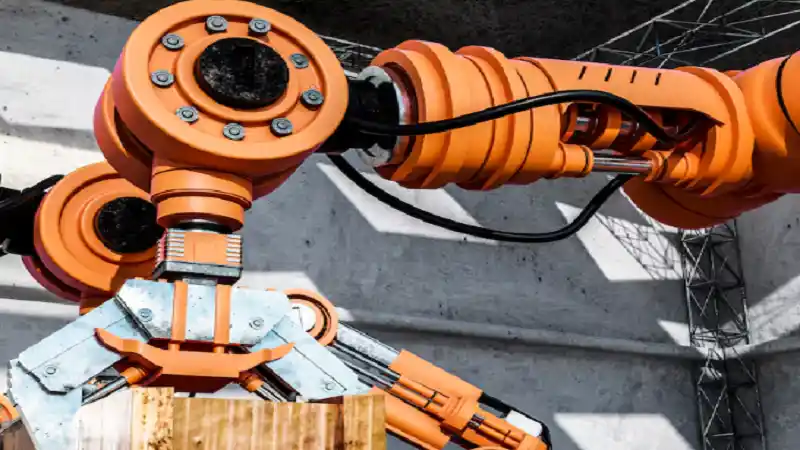
For decades, heavy lifting operations relied almost entirely on a rigger’s eye and the strength of steel. A crew would size up a load, select their gear, and trust years of hard-earned instinct to get the job done safely. That instinct still matters, but it’s no longer working alone. Today, rigging is undergoing a quiet revolution as sensors, software, and connected devices merge with traditional hardware, making lifts safer, faster, and far more predictable.
From Guesswork to Data-Driven Decisions
The biggest shift in modern rigging isn’t a single tool. It’s the addition of real-time data to equipment that used to be purely mechanical. Load shackles, for example, have long been a rigging staple for connecting slings to loads. Now, load-monitoring shackles with built-in strain gauges can transmit precise weight readings to a handheld device or tablet before the load even leaves the ground. Instead of estimating a load’s weight from a spec sheet or shipping manifest, crews get a verified number in seconds, reducing the risk of overloading a crane or a sling.
Similarly, wireless load cells and dynamometers, once bulky and cable-tethered, have become compact and Bluetooth-enabled. Riggers can now clip a load cell into the rigging chain and monitor tension in real time via a smartphone app, spotting dangerous imbalances in multi-point lifts before they become a problem. This is especially valuable in tandem lifts, where uneven load sharing between cranes has historically been one of the most dangerous variables to manage.
Smarter Slings and Connective Hardware
Synthetic slings, including round and web slings, have also entered the digital age. Some manufacturers now embed RFID tags or QR codes directly into the sling’s tag, linking each piece of equipment to a digital inspection record. Rather than relying on a paper logbook that can be lost or falsified, a supervisor can scan the tag to instantly view the sling’s rated capacity, inspection history, and retirement date. This traceability is increasingly important as OSHA and ASME B30 standards call for more rigorous documentation of rigging equipment throughout its service life.
Even something as fundamental as a wire rope clip or a turnbuckle is being reimagined. Smart turnbuckles with embedded tension sensors can alert a rigging crew if a guy-wire or bracing cable has loosened due to vibration or thermal expansion, a common issue during long-duration lifts or structural bracing jobs. This continuous monitoring catches problems that a visual inspection might miss until it’s too late.
Rigging hooks have also seen a similar upgrade. Traditional clevis and eye hooks relied entirely on a rigger visually confirming that the latch was engaged and the load was properly seated in the hook’s bowl. Newer sensor-equipped hooks can detect side loading, confirm latch closure, and flag when a load has shifted off-center, sending an alert before the crane operator even begins the lift. Some models pair with a load-monitoring shackle or load cell elsewhere in the rigging chain, giving the crew a complete picture of weight, angle, and hook engagement from a single dashboard. For bulk lifting jobs, ramshorn hooks fitted with load cells are also becoming more common, allowing crews to confirm even weight distribution across both hook horns before a lift begins.
Chain hoists have followed the same path. Manual and electric chain hoists have long been the workhorses of precision lifting in fabrication shops, on construction sites, and in confined spaces where a crane isn’t practical. Newer electric chain hoists now include digital load displays, overload cutoffs, and Bluetooth connectivity, allowing an operator to monitor chain tension and hoist speed on a tablet rather than reading a mechanical gauge. Some models track motor temperature and chain wear over time, prompting maintenance before a component fails mid-lift. In multi-hoist setups, where several chain hoists work together to lift a single oversized load, synchronized controls can now keep each hoist moving at the same speed, preventing the uneven lifting that used to require constant manual adjustment.
Predictive Software and Digital Twins
Beyond the physical hardware, rigging engineers increasingly use lift-planning software to model the entire operation before a single cable is tensioned. These programs create a digital twin of the lift, factoring in crane capacity charts, sling angles, center of gravity, and ground bearing pressure to flag potential failure points long before the crew steps on site. Where a rigging plan once lived on a printed diagram, it now exists as an interactive 3D model that can be adjusted in real time if site conditions change.
Some of the more advanced platforms integrate directly with spreader bars and lifting beams equipped with onboard sensors, allowing engineers to simulate stress distribution across the beam under different load configurations. This helps prevent the asymmetric loading that has historically caused spreader bar failures.
Safety Culture Meets Smart Tools
None of this technology replaces the judgment of a skilled rigger. It supports it. A load-monitoring shackle still needs a rigger who can read sling angles. A tagged sling still needs a trained eye to spot fraying or UV damage between scans. What smart rigging technology does is remove blind spots: the unknown weight, the invisible overload, and the undocumented wear that used to slip through the cracks.
As lifts grow larger, sites become busier, and safety regulations tighten, this blend of traditional rigging craftsmanship and real-time data is quickly becoming the new baseline. The cranes and slings may look familiar, but the intelligence behind them is anything but old-fashioned. That shift is making heavy lifting safer for everyone on site. See More