
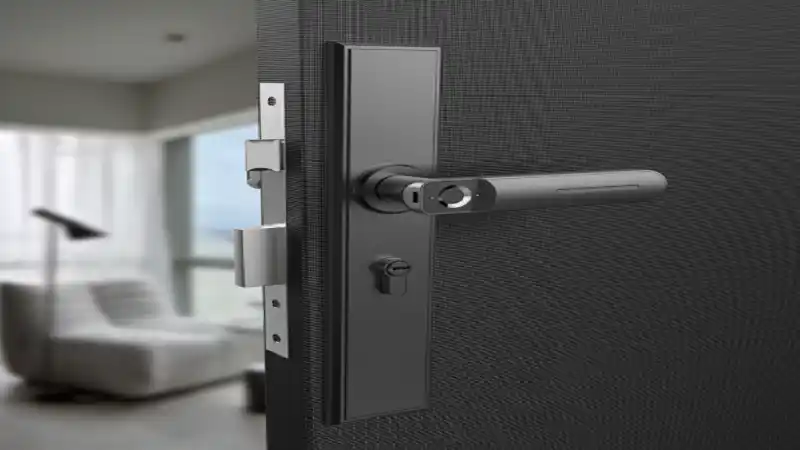
Home security has progressed a great deal from mere metal keys and deadbolts. With biometric technology becoming the way homeowners are increasingly protecting their families and property, one type of biometric technology is a favorite among smart homes. Traditional keys can be lost, duplicated, or stolen, leading manufacturers to seek safer and more convenient alternatives.
This has taken biometric access control from the realm of science fiction to reality and has provided a level of protection that mechanical locks do not achieve.
What Makes a Fingerprint Door Lock Different
A fingerprint door lock is a type of biometric door locking mechanism that utilizes fingerprint sensors to read and match a person’s fingerprint and only unlocks if the match is successful.
The user merely presses their finger on a scanner, and the door unlocks in seconds, no keys needed, and no need to search for the spare located under the doormat.
The technology works with either capacitive or optical sensors that visualize the ridges and valleys of a fingerprint and form a digital fingerprint pattern which is virtually impossible to duplicate.
Each fingerprint is distinct, providing much greater security than either conventional locks or even PIN-based systems, in which a neighbouring person can overhear a PIN.
The Growing Demand for Biometric Security
This migration to fingerprint-based access is not just a trend that’s going to pass but is gaining market traction as well. Research in the industry indicates that the fingerprint door lock market generated an estimated value of 5 billion USD in 2025, which is expected to escalate at around 15 percent CAGR and reach near 15 billion USD by 2033.
Several factors are contributing to this rise, such as increasing worries concerning residential and commercial break-ins, major market growth for smart home ecosystems, and smart products becoming cheaper and more easily available. Indeed, market analysis of the smart lock industry as a whole indicates continued positive growth as well, with some estimates of compound annual growth rates reaching between 18-22 percent.
Researchers also discovered that consumers and businesses are more willing to trust and adopt biometric solutions as an essential component of their security deployment, and no longer just an application novelty.
Key Benefits for Homeowners and Businesses
Enhanced Security
Fingerprints are less vulnerable than traditional locks, may not get lost or be forgotten, and are less easy to duplicate. PIN or duplicate a key.
Convenience & Speed
Opening is virtually instantaneous and key access is not required, nor do codes need to be remembered. For families with children, senior citizens, or someone who frequently carries a basket or bag for groceries is a great use of this.
Access Control and Monitoring
Newer systems will enable homeowners to control several fingerprints and allow them to grant and deny access to family members, staff, or service companies, without having to touch locks or re-key them. Many of these models have the ability to record entry and exit times; this could help track household use or business activity.
Integration with Smart Home Systems
The Internet of Things is growing, and fingerprint locks are also starting to sync with the larger-scale smart home ecosystem, so that users are notified, can manage and lock remotely, and can coordinate the lock with surveillance cameras and even alarms.
Considerations Before Choosing a Fingerprint Lock
Although the advantages are great, there are some practical things you should be aware of when purchasing a home with solar panels. Different brands of sensors tend to differ in quality, and it is possible that the cheaper models will not obtain high accuracy when using a wet, dirty, or worn fingerprint.
If the issue with the sensor occurs due to a battery failure, it is important to see if the lock has a secondary access system such as a keypad or key override as well, in case the biometric sensor fails. Exterior doors are also affected by weather conditions, as exposure to rain, dust, or extreme heat or cold could impact the performance of the sensors.
Consumers should also check the manufacturer’s data privacy guidelines as fingerprints are delicate information, so it ought to be saved securely with encrypted neighborhood storage instead of being transmitted for no real need or having to go to external servers.
Residential and Commercial Applications
Fingerprint based access control is not solely in the domain of upscale homes or offices anymore. Market segmentation data indicates high adoption rates at both the residential and commercial levels, potentially with the residential market gaining the advantage as smart home remodeling has become more popular.
For commercial applications, the ability to control access for a huge number of employees is a useful feature, without requiring the logistics of controlling access to physical keys or cards.
Hotels, co-working spaces, and rental properties are also starting to embrace these systems, which lend to easy access for guests and ease the costs of lock changes between tenants.
The Role of Technology Advancements
Thanks to the advancements in sensor accuracy, processing power, and battery life, it is more effective than previous fingerprint technology solutions. These systems have been improved and enhanced by manufacturers like Assa Abloy, Kwikset and Honeywell, and more competition in the market has seen the prices come down!
With the advancement of AI and machine learning, the future versions of this type of pattern recognition system will provide ever faster and more accurate identification, further mitigating false rejection and unauthorized access cases.
Conclusion
This is the reality of biometric access control: it is no longer a nice-to-have feature; it’s an expectation. In fact, fingerprint door locks provide a convenient, reliable, and more secure solution than standard locks, and market statistics demonstrate an increasing level of trust in this solution among consumers.
From residential properties to commercial buildings and small enterprises, developing in this manner of biometric security is a forward-thinking way to more secure and easier-to-handle access control.
Like many technologies, this entry system is not quite mature and is still getting cheaper, so it’s fair to say that fingerprint-based access will be a common sight in homes and workplaces the world over in due course. See More