
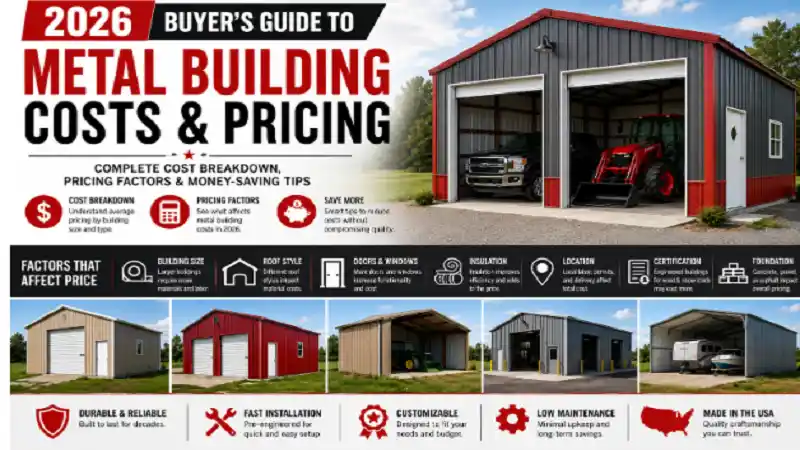
As construction costs continue to rise across the United States, more homeowners, farmers, and business owners are turning to steel structures as a cost-effective alternative to traditional construction. Whether you’re planning a garage, workshop, warehouse, barn, or commercial facility, understanding metal building costs in 2026 can help you make an informed investment.
This buyer’s guide breaks down the key factors affecting pricing, common building sizes, customization options, and money-saving tips to help you get the best value for your project.
Why Metal Buildings Are Popular in 2026
The demand for steel structures continues to grow due to their durability, affordability, and versatility. Compared to traditional wood-frame construction, a metal building offers faster installation, lower maintenance costs, and a longer lifespan.
Modern metal buildings are commonly used for:
- Residential garages
- Workshops
- Agricultural storage
- Commercial warehouses
- RV and boat storage
- Manufacturing facilities
- Retail spaces
Because steel structures can be customized for virtually any purpose, they remain one of the most practical construction solutions available.
Average Metal Building Costs in 2026
The total cost of a metal building depends on several variables, including size, location, design, and customization requirements.
While pricing varies significantly, buyers should generally expect costs to include:
- Steel framing and panels
- Roof system
- Delivery charges
- Foundation preparation
- Installation labor
- Permits and inspections
- Optional upgrades
Smaller residential structures typically cost less than large commercial buildings, but customization can significantly impact the final price.
Factors That Affect Metal Building Pricing
1. Building Size
Size is one of the biggest factors influencing cost. Larger buildings require more steel, labor, and foundation materials.
Popular sizes include:
- 20×20
- 24×30
- 30×40
- 40×60
- 50×100
The larger the building, the higher the overall investment.
2. Steel Market Prices
Steel prices fluctuate based on supply chain conditions, manufacturing demand, and global economic trends. Changes in raw material costs can directly affect the price of your project.
3. Building Location
Your geographic location impacts:
- Freight charges
- Local labor costs
- Permit fees
- Wind load requirements
- Snow load certifications
Buildings installed in areas with strict engineering requirements may cost more than those in moderate climates.
4. Foundation Requirements
Most structures require a properly prepared foundation before installation.
Common foundation options include:
- Concrete slab
- Gravel base
- Asphalt surface
Concrete foundations generally represent one of the largest additional project expenses.
5. Custom Features
Adding upgrades can improve functionality but also increase overall costs.
Popular upgrades include:
- Insulation packages
- Roll-up garage doors
- Walk-in doors
- Windows
- Skylights
- Lean-tos
- Ventilation systems
- Interior framing
Carefully selecting features can help balance performance and budget.
Roof Styles and Their Impact on Cost
Most buyers choose from three primary roof styles.
Regular Roof
The most economical option. Suitable for areas with mild weather conditions.
Boxed-Eave Roof
Offers improved appearance and water runoff compared to regular roofs.
Vertical Roof
The premium choice for durability and weather resistance. Vertical roofs provide superior performance in regions with heavy rain or snow.
Although vertical roofs cost more initially, many buyers consider them a worthwhile long-term investment.
Cost-Saving Tips for Buyers
If you’re looking to maximize value without sacrificing quality, consider the following strategies:
Choose the Right Size
Many buyers overspend by purchasing more space than necessary. Carefully evaluate your current and future storage needs before selecting dimensions.
Limit Unnecessary Upgrades
Focus on features that improve functionality and long-term performance rather than cosmetic additions.
Prepare the Site in Advance
Completing grading, clearing, and foundation work before installation can reduce project delays and additional expenses.
Compare Multiple Quotes
Obtaining estimates from several reputable suppliers helps ensure competitive pricing and better service.
Metal Buildings vs Traditional Construction
When comparing costs, many property owners find that metal buildings provide significant advantages over conventional construction methods.
Lower Maintenance
Steel structures resist:
- Rot
- Mold
- Insects
- Fire damage
This reduces long-term repair and maintenance expenses.
Faster Installation
Many metal buildings can be installed much faster than traditional structures, reducing labor costs and project timelines.
Long-Term Durability
A properly engineered metal building can provide decades of dependable service with minimal maintenance.
Is a Metal Building Worth the Investment?
For many buyers, the answer is yes. The combination of durability, customization, affordability, and low maintenance makes steel structures one of the smartest construction investments available in 2026.
Whether you’re building a personal garage, commercial facility, agricultural storage building, or workshop, understanding all cost factors before purchasing helps ensure a successful project.
By carefully evaluating your needs, selecting the right features, and working with a trusted supplier, you can maximize your return on investment while securing a building designed to last for decades.
Final Thoughts
Understanding metal building costs and pricing in 2026 is essential before starting any construction project. Factors such as size, location, roof style, foundation requirements, and customization options all contribute to the final price.
The good news is that today’s steel structures offer exceptional value, combining affordability with strength and longevity. For buyers seeking dependable, high-quality solutions, Bulldog Steel Structure continues to provide durable metal buildings designed to meet residential, agricultural, and commercial needs across the United States.
Frequently Asked Questions
1. How much does a metal building cost in 2026?
The cost of a metal building depends on its size, design, location, and customization options. Small residential buildings typically cost less than large commercial or agricultural structures.
2. What factors affect metal building prices the most?
The biggest pricing factors include building size, steel market prices, roof style, location, foundation requirements, and optional upgrades such as insulation and doors.
3. Are metal buildings cheaper than traditional construction?
In many cases, yes. Metal buildings often require less labor, faster installation, and lower maintenance costs than traditional wood-frame construction.
4. Does insulation increase the cost of a metal building?
Yes. Insulation adds to the upfront investment but improves energy efficiency, temperature control, and moisture protection over the building’s lifespan.
5. What is the best roof style for a metal building?
Vertical roofs are generally considered the most durable and weather-resistant option, especially in areas with heavy rain or snow.
6. Do metal buildings require a concrete foundation?
Not always. While concrete slabs are the most common foundation choice, some structures can be installed on gravel or asphalt depending on local requirements.
7. How long does a metal building last?
A properly installed and maintained metal building can last several decades, making it one of the most durable and cost-effective construction solutions available.