
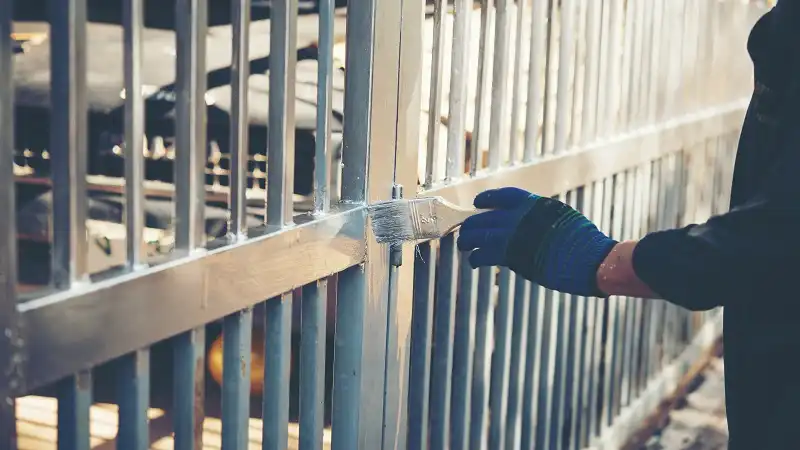
You walk out to your front yard, coffee in hand, and notice those familiar orange streaks bleeding down your wrought iron fence. The temptation is incredibly strong. A few cans of cheap spray paint from the local hardware store seem like a fast, inexpensive way to restore your property’s curb appeal before the weekend is over.
It feels like a simple weekend chore, but that quick cosmetic cover-up is actively destroying your property. Simply painting over a rusted metal fence is an ineffective, temporary fix that worsens underlying corrosion and leads to complete structural failure.
Rust is not just an ugly discoloration on the surface of your yard. It is a severe chemical reaction that eats away at the structural integrity of your investment. According to the Department of Energy, the total cost of corrosion to the U.S. economy is estimated to exceed a trillion dollars annually.
The Hidden Danger of the “Quick Fix”
Property owners often ask a very logical question. Does covering rust with paint stop it from spreading? The short answer is no, it actually makes the problem significantly worse.
When you spray a fresh coat of paint directly over an oxidized surface, you are creating a seal. This seal traps existing moisture, air, and microscopic water droplets tightly against the raw metal. Instead of suffocating the rust, you have created a perfect, enclosed greenhouse for corrosion to thrive.
While a quick weekend spray-painting session might temporarily improve your yard’s curb appeal, it often masks deeper oxidation that is quietly destroying your metalwork. To ensure long-term durability and safety, proper wrought iron repairs require comprehensive rust remediation and structural assessment before a single drop of new coating is applied.
Flaking: Why Standard Paint Fails
If you have tried the DIY spray paint method before, you likely found yourself wondering why the paint bubbles and peels off so quickly. The answer comes down to basic chemistry and the fundamental science of oxidation.
Rust is iron oxide, a byproduct created when iron reacts with oxygen and water. This reaction creates a brittle, flaky, and weakened layer on top of the solid steel structure. When you apply standard paint to a rusted fence, the liquid coating is only sticking to this brittle crust of iron oxide.
It never reaches the solid metal beneath. As the rust naturally expands and flakes away from the core structure, it takes your fresh coat of paint right off with it. Standard thin latex paints simply lack the chemical composition to penetrate oxidation or bond properly to compromised surfaces.
This natural degradation is inevitable without proper intervention. The experts at NASA explain that Metals are inherently unstable in their environments and will naturally revert to their mineral forms unless they are protected by specialized barrier films. Without completely removing the unstable rust layer first, any paint you apply is guaranteed to fail.
Diagnosing the Damage: Surface Rust vs. Structural Rot
Before you can fix the problem, you need to know exactly what you are dealing with. How can you tell if your fence has simple surface rust or deep structural damage?
Understanding the difference is critical for the safety of your property. Surface rust is generally a cosmetic issue that sits on the top layer of the metal. Structural degradation means the core strength of the fence is compromised, turning a cosmetic annoyance into a load-bearing safety hazard.
| Feature | Surface Rust | Structural Degradation |
|---|---|---|
| Appearance | Light orange or brown discoloration, minor powdery flaking. | Deep pitting, large bubbling chunks of metal splitting apart. |
| Physical Feel | Rough to the touch, but the metal beneath remains entirely solid. | Hollow, soft, or crumbly when tapped with a hard tool. |
| Structural Impact | Strictly cosmetic. The fence retains all of its load-bearing strength. | Weakened joints, sagging gates, broken and detached pickets. |
| Required Action | Thorough mechanical sanding, proper priming, and recoating. | Professional welding repair, component replacement, and full restoration. |
Ignoring structural weakness is a massive mistake. If you try to cover brittle, hollowed-out pickets with a thick layer of paint, those components will eventually snap under pressure.
A fence that loses its structural integrity cannot do its job to secure your property. Choosing to do the job right the first time prevents a small weak point from forcing you into a total, expensive fence replacement.
Conclusion
Spray painting over a rusted fence is a false economy that ultimately accelerates the very damage you are trying to hide. Trapping moisture against raw metal guarantees that your ironwork will continue to rot from the inside out.
To permanently stop corrosion and protect your property, you must rely on proper rust remediation, structural welding repairs, and the application of industrial oil-based coatings. This comprehensive approach is the only way to ensure the elements cannot breach the metal’s surface again.
Your wrought iron fence is a premium feature that adds significant value and security to your home. By abandoning the cheap quick fixes and investing in professional restoration, you can secure the lasting beauty and safety of your property for decades to come.
See More: DecoradTech